

Photo provided by Cumberland County Conservation District.
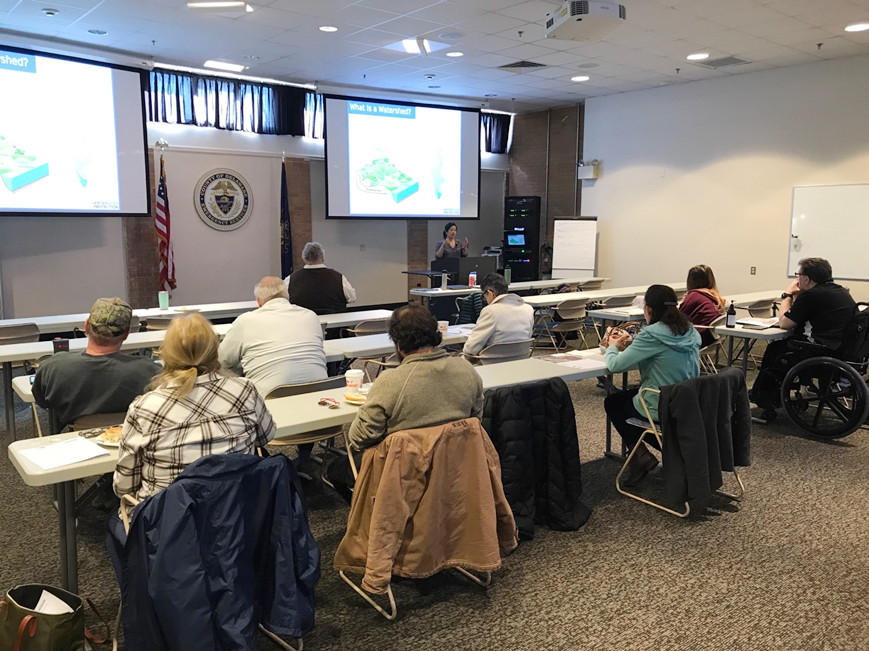
On March 24, 2022, the Cumberland County Conservation District held an Erosion and Sedimentation/National Pollutant Discharge Elimination System Workshop in Carlisle, PA. Sixty-five engineers attended the training.
Topics covered included an updated district fee schedule, PAG-01, online resources, e-permitting, and Managed Release Concept stormwater design.
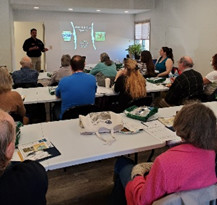
The Snyder County Conservation District (SCCD) held two manure management plan (MMP) writing workshops for farmers, farm owners, livestock, and poultry operators to write their own MMPs. The sessions were held at the SCCD office on March 24, 2022. Nine farmers attended.
Barry Spangler, SCCD Agricultural Conservation Technician, gave an overview of the Manure Management Manual and other agricultural, environmental regulations. He gave a step-by-step process of how farmers can write their MMPs that meet these new regulations, including a demonstration of PAOneStop. Spangler also provided information about the state agricultural erosion and sedimentation plan requirements for owned and rented lands.
Financial and other support for this project is provided by the Pennsylvania Association of Conservation Districts, Inc. through a grant from the Pennsylvania Department of Environmental Protection under Section 319 of the Clean Water Act, administered by the U.S. Environmental Protection Agency.
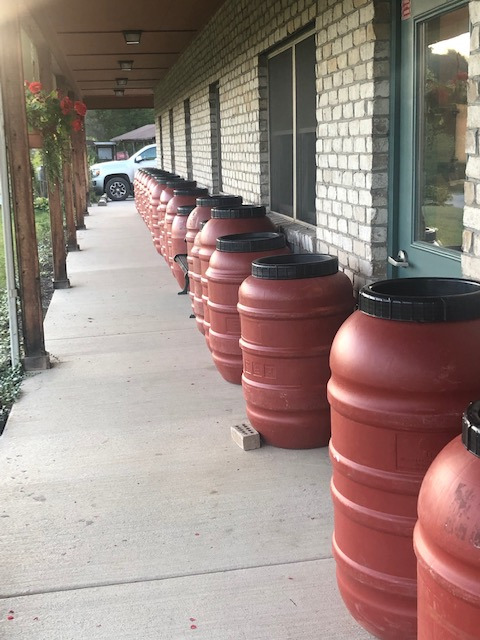
Photo provided by Dauphin County Conservation District.
Dauphin County Conservation District planted a total of 5.7-acres of multi-functional riparian forest buffers at four sites in Dauphin County. Together the projects cost $17,651.56 and were paid for through PACD’s multi-functional buffer sub-grant program. https://pacd.org/?page_id=17536
Financial and other support for this project is provided by the Pennsylvania Association of Conservation Districts, Inc. through a grant from the Pennsylvania Department of Conservation and Natural Resources, Bureau of Recreation and Conservation.
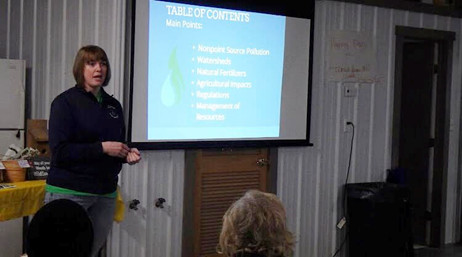
The Wayne Conservation District held a workshop through PACD’s Nonpoint Source Pollution Prevention Mini-grant Program for Conservation Districts. The district educated STEM teachers on soil health and nonpoint source pollution. The event was held at a local farm that utilizes a lot of the practices that were taught. A rainfall simulator was also used to demonstrate how soil reacts to rainfall.
Financial and other support for this project is provided by the Pennsylvania Association of Conservation Districts, Inc. through a grant from the Pennsylvania Department of Environmental Protection under Section 319 of the Clean Water Act, administered by the U.S. Environmental Protection Agency.
Bill Chain from the Chesapeake Bay Foundation explains rain’s effects on no-till, plowed, fodder-covered, and grassed waterway soils. Photo provided by Cumberland County Conservation District.
On December 15, 2021, the 10th Annual Corn Planter Clinic was held at the Shippensburg Auction Center. The clinic is the largest agricultural education event in Cumberland County. Staff from the Cumberland County Conservation District worked with Cumberland Planter in organizing this event. The event is beneficial for the farming community to come together to share ideas and gather valuable information from knowledgeable speakers. A total of 160 people attended.
Click here to read the entire article and to view more photos.
Buffer signage was installed as part of the mini-grant project. Photo provided by Franklin County Conservation District.
The Franklin County Conservation District team held an adult education event to address local water quality issues. In partnership with the Izaak Walton League, the staff discussed clean water best management practices suitable for any landowner.
Those who joined the event learned, and had the chance to practice, how to properly plant trees/shrubs with retired service forester Mike Kusko of the Izaak Walton League. They also received a tour of the property and trees planted to date, explored the new educational signs, and learned about funding programs that can assist them with their conservation efforts and collective county clean water goals.
Financial and other support for this project is provided by the Pennsylvania Association of Conservation Districts, Inc. through a grant from the Pennsylvania Department of Environmental Protection under Section 319 of the Clean Water Act, administered by the U.S. Environmental Protection Agency.

PSE Educator Andrew Frankenfield shows event attendees native meadow seed mix components. Photo provided by Montgomery County Conservation District.
On November 19, 2021, Montgomery County Conservation District (MCCD), in coordination with Penn State Extension (PSE), hosted a native meadow planting demonstration at Skippack Church. The event was funded through a PA Department of Environmental Protection (DEP) Environmental Education Grant. There were approximately 35-40 people in attendance, including DEP staff, township officials, PSE master watershed stewards, community members/homeowners, members of the church where the planting occurred, and members and staff of other local churches. It was a chilly and breezy day, but everyone who made the time to attend was very interested in the topic, asked great questions, and seemed pleased with the event.
Abby Reiter of MCCD presented on meadow site selection, site preparation, species selection, meadow lifecycles, maintenance, and seed mix components. Andrew Frankenfield, Montgomery County PSE Educator, showcased measuring and mixing meadow seed and demonstrated calibrating the no-till drill for planting. With the assistance of a local farmer, who graciously brought and operated his tractor, the event concluded with a planting demonstration. A third-of-an-acre native meadow area was seeded at Skippack Church utilizing the district-owned no-till planter, which is available for rental to county residents free of charge.
By: Jennifer A. Brooks, Environmental Education and Outreach Coordinator, Berks County Conservation District
Recently Kent Himelright, Watershed Specialist with the Berks County Conservation District (BCCD), organized a massive live stake planting on the Cacoosing Creek as part of an initiative for the Coldwater Conservation Plan for the Cacoosing Creek Watershed. The project was funded by the PA Fish and Boat Commission. The BCCD, along with an outstanding showing of volunteers, planted 1,000 native live stakes along 4,000 ft. of the stream over two days to enhance the riparian area to provide shade and habitat for aquatic wildlife, filter pollutants from stormwater runoff, and reduce streambank erosion.
Teachers look at macroinvertebrates they collected. Photo provided by Northampton County Conservation District.
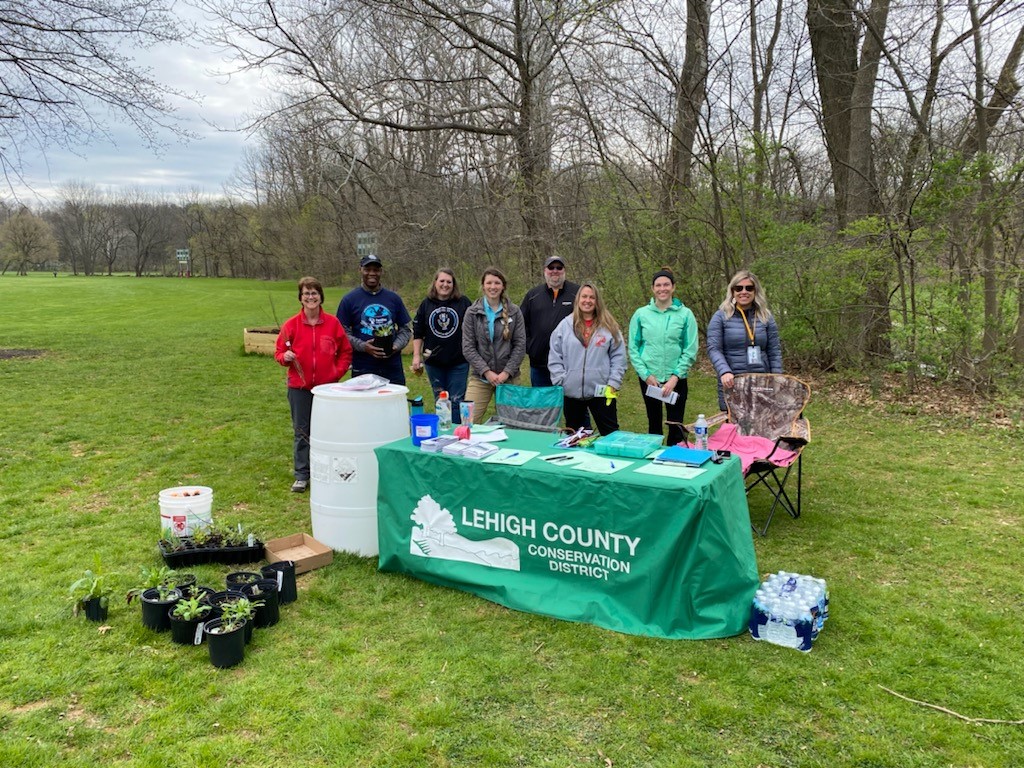
Northampton County Conservation District held a workshop for teachers titled “FUNdamentals of Stream Ecology.” The workshop focused on methods to assess the water quality of a stream via visual and biological assessment (kick seines, d-frames, and leaf packs) and identification of nonpoint source pollution issues by comparing two stream types (urban, natural). The attending educators were introduced to the terminology associated with stream ecology and were provided information, literature, and techniques to be applied in their classrooms.
Financial and other support for this project is provided by the Pennsylvania Association of Conservation Districts, Inc. through a grant from the Pennsylvania Department of Environmental Protection under Section 319 of the Clean Water Act, administered by the U.S. Environmental Protection Agency.
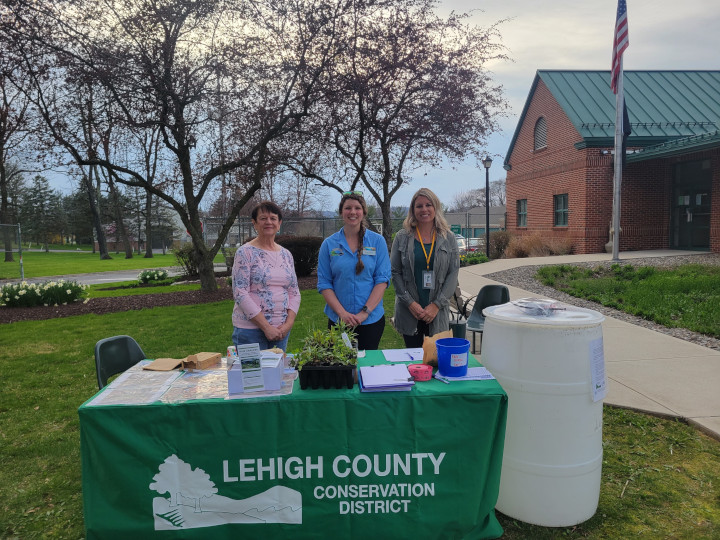
Lisa Blazure Soil Health Coordinator, Stroud Water Research Center, gave a presentation about, until recently, the mostly unrecognized soil biology that works cooperatively with plants to extract soil nutrients and soil matter more effectively. Photo provided by Snyder County Conservation District.
The Snyder County Conservation District (SCCD) held a Soil Health Toolbox Field Day event on BDS Farms in Beaver Springs on November 10, 2021. Thirty-nine farmers, consultants, and conservationists attended this field day.
Farmers learned about:
How their farm’s “soil herd” can work for them.
Improved soil health can minimize soil and nutrient losses.
Various cover crop mixes and establishment practices.
How better soil health can improve soil water infiltration and resistance to erosion.
Financial and other support for this project is provided by the Pennsylvania Association of Conservation Districts, Inc. through a grant from the Pennsylvania Department of Environmental Protection under Section 319 of the Clean Water Act, administered by the U.S. Environmental Protection Agency.