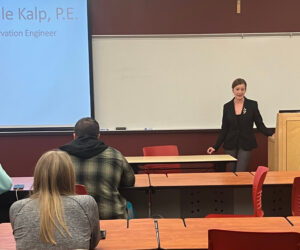

 Registration is now open for Chapter 102 Basic Technical Training May 20-24, 2024, at the Red Lion Harrisburg Hershey in Harrisburg, PA. Attendance is open only to conservation district and DEP employees working with Chapter 102.
The training is appropriate for individuals who are new or relatively new to their position, have never taken a similar training, would like a refresher, or would like guidance and skill enhancement for field inspections. The course curriculum assumes all participants have completed the prerequisite coursework on the Clean Water Academy.
There is no cost to register, most meals are provided, and a partial lodging reimbursement is available. The training is in-person only. Click here for additional information and to register. You will need to log into the Clean Water Academy (CWA) to access this link. Please contact Christopher Grimsley at cgrimsley@pacd.org if you need assistance accessing the CWA. All other questions may be directed to Molly Burns at mburns@pacd.org.
This training is funded through a grant from the PA Department of Environmental Protection and made possible through the cooperation of the PA Association of Conservation Districts and Pennsylvania’s conservation districts.
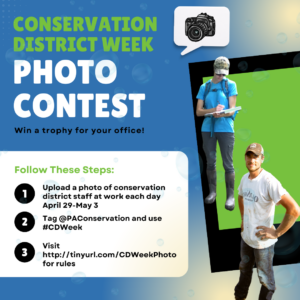 Conservation District Week
 Mark your calendars for the 2024 Section 319 Virtual Watershed Planning and Implementation Meeting from 9:00 a.m. to Noon May 28-29, 2024. The event is open to entities involved in Section 319 Nonpoint Source Management projects, including conservation district staff, DEP and EPA staff, incorporated watershed associations, counties, municipalities, councils of governments, 501(c)(3) non-profits, educational institutions, and municipal authorities. Look for a registration announcement in an upcoming edition of Front Page.
 Nominations are now being accepted for the PACD Conservation Awards. New for 2024, the award nominations have been simplified and streamlined with an online nomination form. Nominations must be received by April 30, 2024.
 PACD is accepting mini-grant applications from conservation districts for up to $3,000 to implement educational and outreach activities that support and extend the Conservation Reserve Enhancement Program (CREP) work. Projects should focus on CREP enrollment, re-enrollment, and/or CREP maintenance.